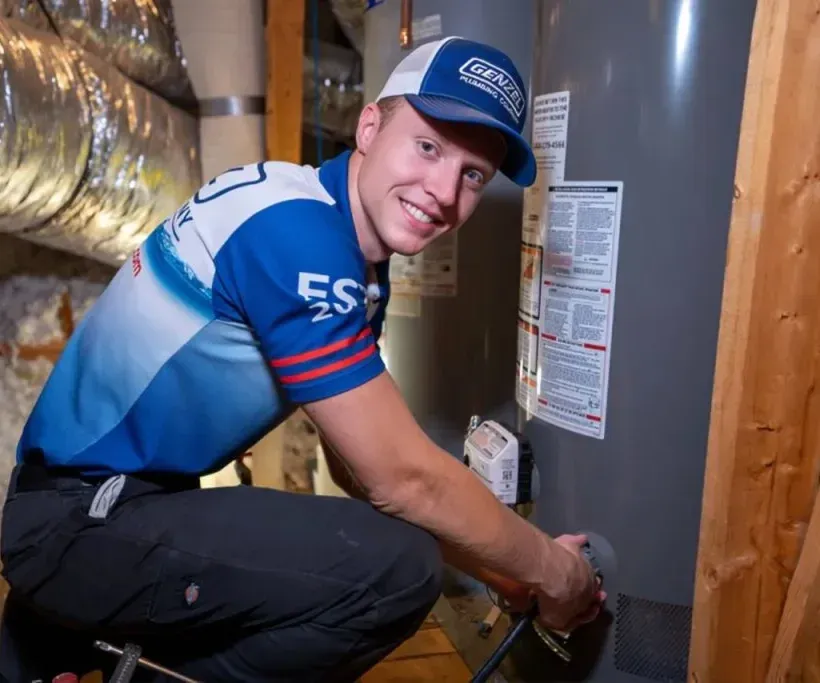
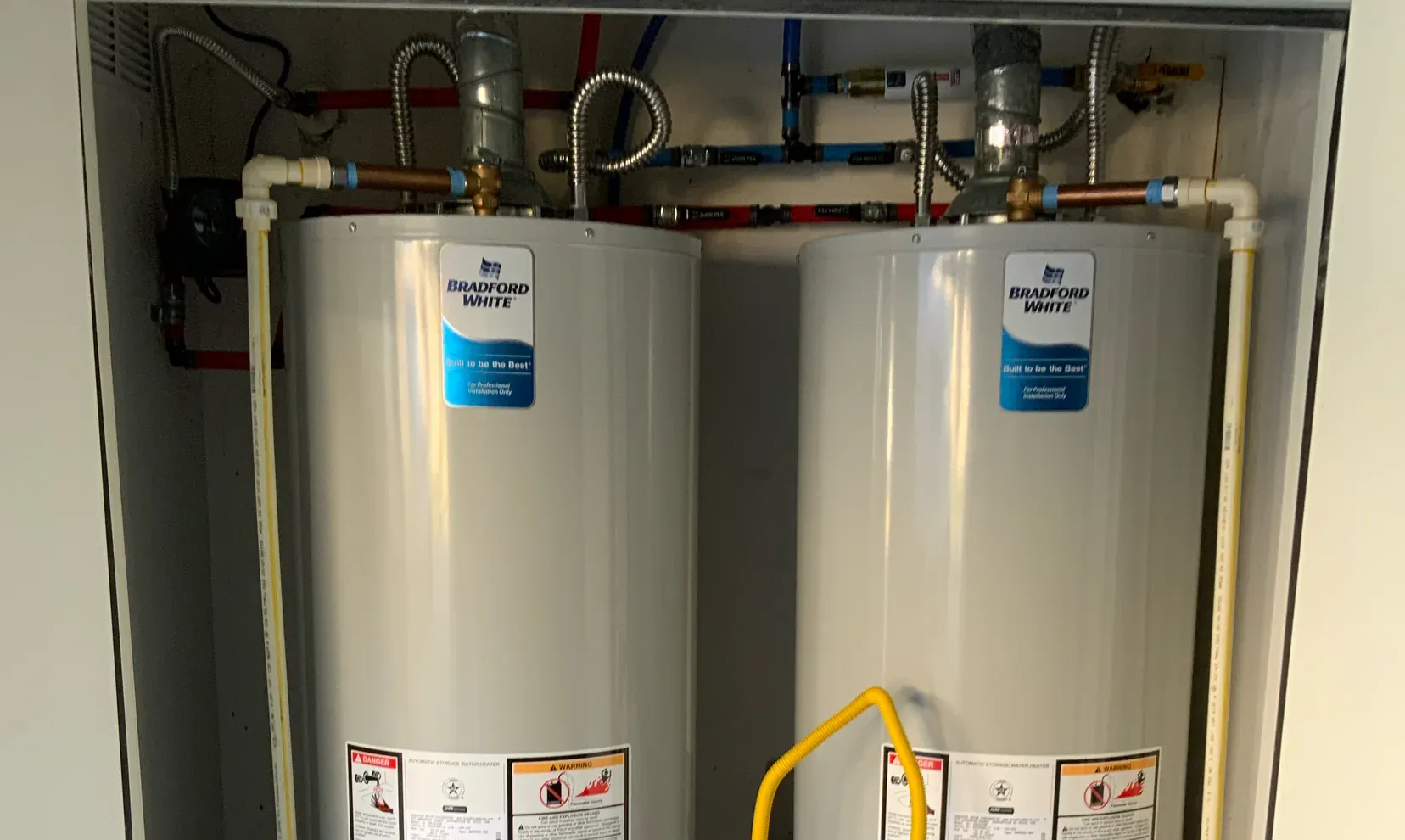
If your Plano water heater is past ten years old or leaking from the tank, replacing it is usually the better use of the money. Genzel Plumbing replaces tank and tankless water heaters in Plano. We size the new one to how your house uses hot water, pull the permit where one is required, and give you the price before any work starts. Call (972) 238-5585.
Signs your water heater needs replacing, not repairing
Plenty of water heater problems are repairs. A pilot, thermocouple or heating element is cheaper than a tank, and we would rather tell you that than sell you a new one. These are the signs that point toward replacement instead:
- Water at the base or in the pan that is coming from the tank itself. A leaking fitting or relief valve can be fixed. A tank that has rusted through cannot.
- Rusty hot water that comes back after the anode rod is dealt with. Sometimes the rod is the problem. When it is the tank, the rust keeps coming.
- Age. The Department of Energy gives most storage tanks 10 to 15 years. Plano’s hard water usually takes that toward the low end, especially on a tank that was never flushed.
- A repair quote that is half the price of a new heater. On a twelve year old tank, that money usually just pushes the replacement back a few months.
- Hot water that still runs out after a repair. Sediment piles up on the tank floor and takes space that used to hold water.
If you are not sure which you have, we check the unit, tell you its age and what is wrong, and give you a repair price and a replacement price side by side. Then you choose. More on the repair side is on our water heater repair page.
Plano homes where replacement comes up
Plano’s housing runs from the 1970s to new builds, and each era reaches replacement on its own schedule. In Willow Bend, estates built between 1989 and 2001 are now 25 to 35 years into their systems, and water heater replacement is one of the jobs that brings us there. Collin Creek and East Plano have some of the city’s oldest homes, from the 1970s and earlier. Some are still on original galvanized supply lines, and water heater replacement comes up there alongside repiping. At Legacy West and Granite Park, the townhomes and residences tend to have tankless heaters already, so the work there is more often descaling than replacing. We work across 75023, 75024, 75025, 75074, 75075 and 75093, and the rest of what we do in those homes, from slab leaks to cast iron sewer lines, is on our page for plumbers in Plano, TX.
Tank or tankless, gas or electric
The first decision is whether the new one should match the old one.
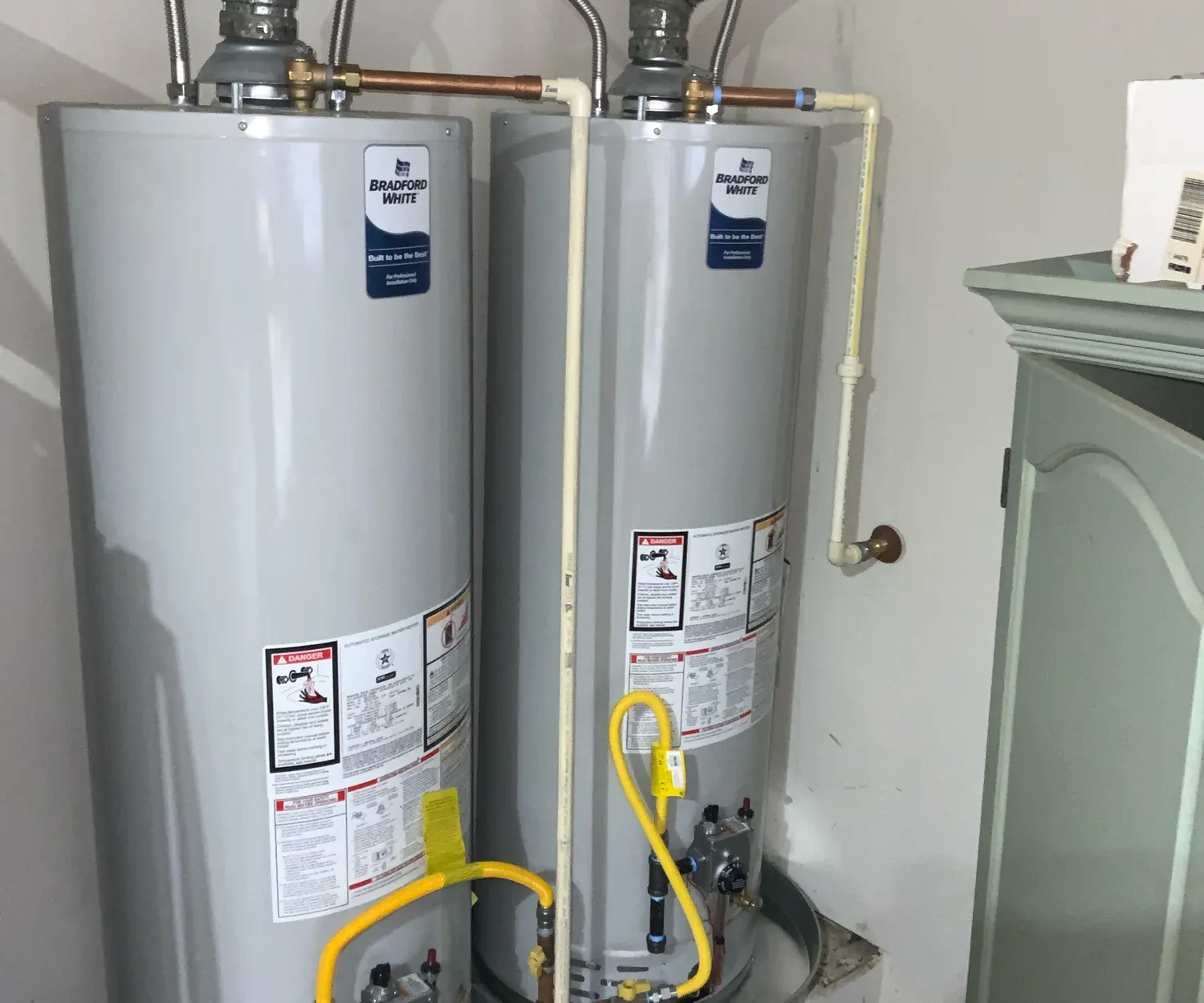
A tank costs less up front and is the simpler swap. It holds 40 or 50 gallons hot and reheats once that is used. When the power goes out, you still have whatever hot water is already in the tank.
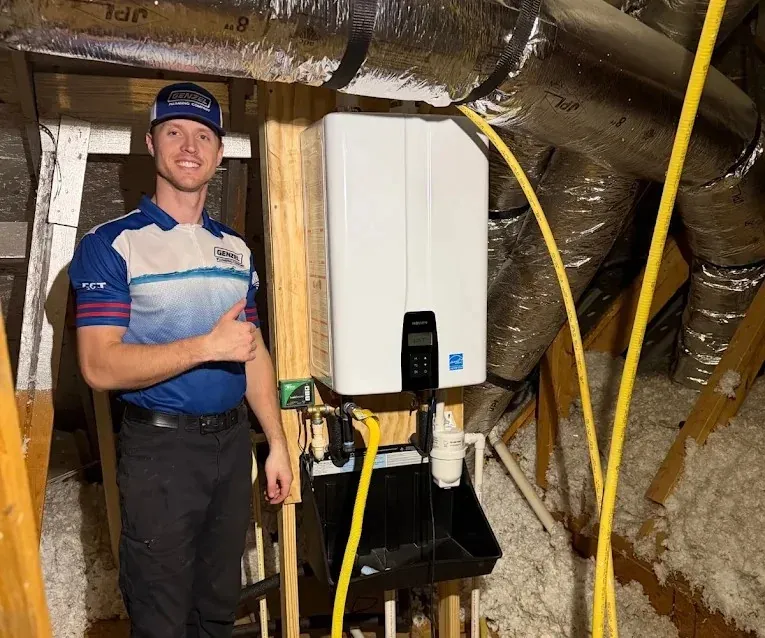
A tankless unit heats water as it flows, so a properly sized one will not run out. It hangs on the wall, which frees up the garage corner or attic platform the tank used, and the Department of Energy puts most tankless units at more than 20 years of life. It costs more to buy and to install.
Gas or electric matters mostly for tankless. A gas tankless burns a lot of gas in short bursts, so the line feeding it often needs to be bigger than the one the tank used, and it needs its own venting. That gas and venting work is where most of the extra cost goes, and it is the reason we look at your house before giving you a tankless price. A gas tankless still needs electricity for its controls, so it stops when the power does.
We price both options and tell you which one makes sense for your house. The full trade off is in our tankless pros and cons guide, and installs are covered on our tankless water heaters page.
Sizing the new heater
An undersized heater lets you down every winter morning. An oversized one costs more to buy and to run. We size on the number of bathrooms and how much hot water the household uses at once, not on square footage. For tankless, we also size for how cold the incoming water gets in January, because a unit sized for July will go lukewarm in winter.
What happens on replacement day
You get a text before we arrive saying who is coming and roughly when. The plumber checks the old unit and the space it sits in, then goes through your options with prices attached, Good, Better and Best, before anything is disconnected.
A like for like tank swap is usually finished the same day. The new heater goes in to code: venting, the expansion tank, the pan and drain, and gas line sizing. We pull the permit where it is required, and that matters later when you sell the house, because unpermitted work tends to show up in the inspection. A conversion from tank to tankless takes longer, since the gas line, venting and sometimes the electrical have to be done first. We tell you which kind of job yours is before we start.
If the old tank is leaking right now, shut off the water supply to the heater and call (972) 238-5585. Leaks and lost hot water go to the front of the queue.
Prices and financing
You see the price before the work starts, and there is a warranty on the work. Financing is available, which for a lot of Plano households is the difference between replacing a failing tank now and waiting for it to flood the garage. We also run install specials on tank and tankless heaters from time to time, listed on our specials page.
Making the new one last in Plano’s hard water
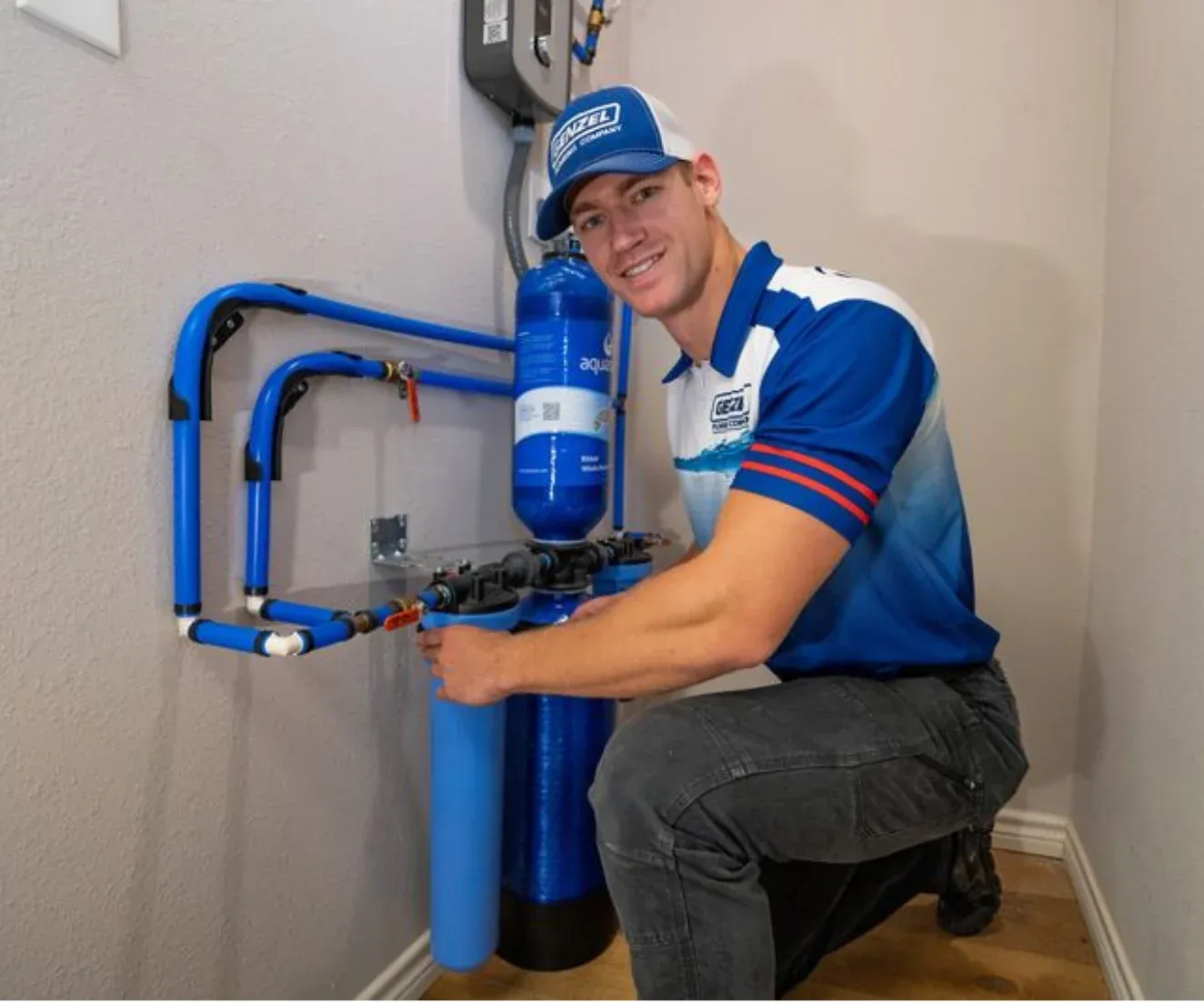
Minerals in Plano’s water settle on the bottom of a tank and coat the inside of a tankless heat exchanger. A flush once a year is the cheapest thing you can do to protect a new heater. Genzel Guardian Plan members get that flush every year, plus 15 percent off every service and no dispatch fees, for $27 a month or $282 a year. If hard water is wearing out more than the heater, our water filtration page explains what treating it involves.